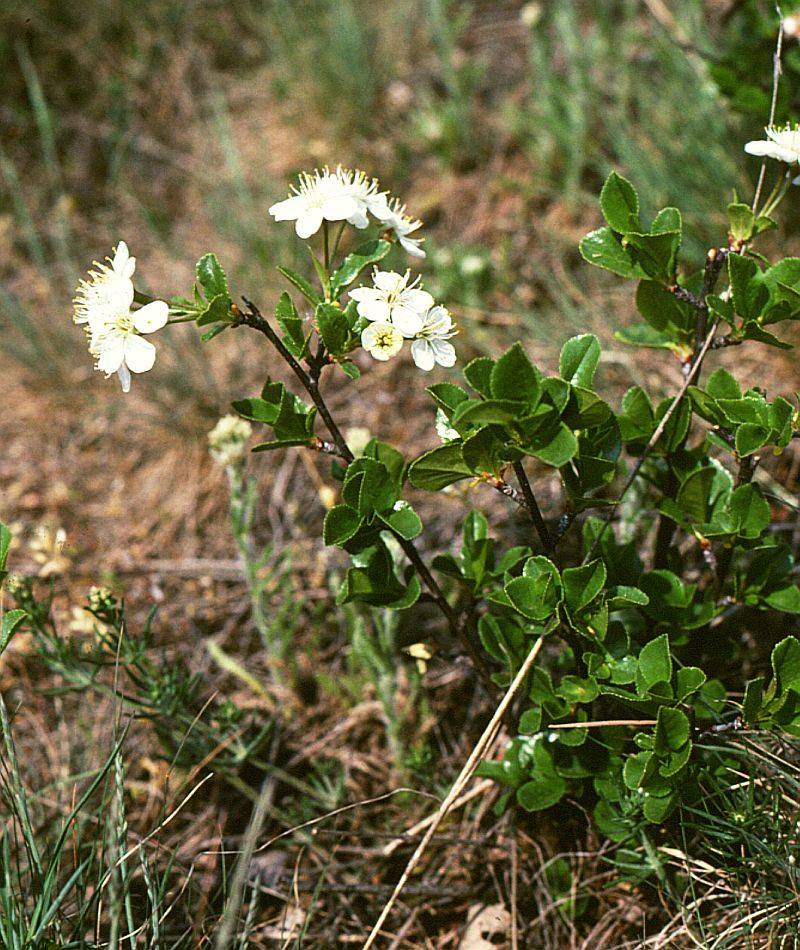
Photo: Franz Xaver — CC BY-SA 3.0 · source
Survives zone 3 through 7
Harvest calendar
Best planted in early spring after your last frost, or in fall before the ground freezes, depending on your climate.
Fruit is harshly tart and acidic — rarely eaten out of hand, but valued cooked or sweetened for jams, jellies, pies, and cherry liqueurs. ⚠ Kernels/pits cyanogenic.
- Hardiness
- Zone 3–7
- Habit
- Shrub
- Edible part
- Fruit
- Ripens
- Summer–autumn
- Mature size
- Low suckering shrub 0.5–1.5 m — the ground cherry, also used as a dwarfing rootstock
- Light
- Full sun
- Soil pH
- 6.0–7.0 (near-neutral)
- Environment
- Steppe
- Native range
- Native to central and southeastern Europe, Ukraine, European Russia, the northern Caucasus, Kazakhstan, and the Altai region.
- Status
- Both wild and cultivated
- Years to fruit
- 2–4 yrs
- Growth speed
- slow to moderate; typically reaches 1–2 m mature height
- Spacing
- 125 cm (49 in) apart — about 1.6 m² (17 sq ft) per plant
- Leaf shape
- Ovate-elliptical with crenate-serrulate margins, glossy and smooth, 2–5 cm long.
- Root system
- Suckering and spreading.
- Fruit description
- Globose, dark red cherry about 1.5 cm across with a single large stone.
- Propagation
- Spreads readily by suckers and division; seed needs cold stratification; also increased by softwood cuttings, and used as a cherry rootstock.
- Pollination
- Self-fertility isn't well documented for the wild species itself; its bred hybrids with sour cherry (P. cerasus), such as 'Carmine Jewel', are self-fertile
The edible parts listed above are a starting point, not a field guide. Identify a plant with certainty — ideally against a local authority — before eating any part of it, and read the full disclaimer. Spotted something wrong? Report it.
Growing guide
How it spreads. Strongly suckering, forming dense colonies and thickets in dry grasslands and forest-steppe habitat.
Growing tips. Extremely cold-hardy, tolerating temperatures to about -45°C (USDA zone 2); prefers full sun and well-drained, loamy to lime-rich soil; bred with sour cherry (Prunus cerasus) to produce cold-hardy dwarf cherry cultivars such as the University of Saskatchewan's 'Carmine Jewel' and 'Juliet'.
Grow journal
Sign in to keep a dated log of when you planted, bloomed and harvested this plant.