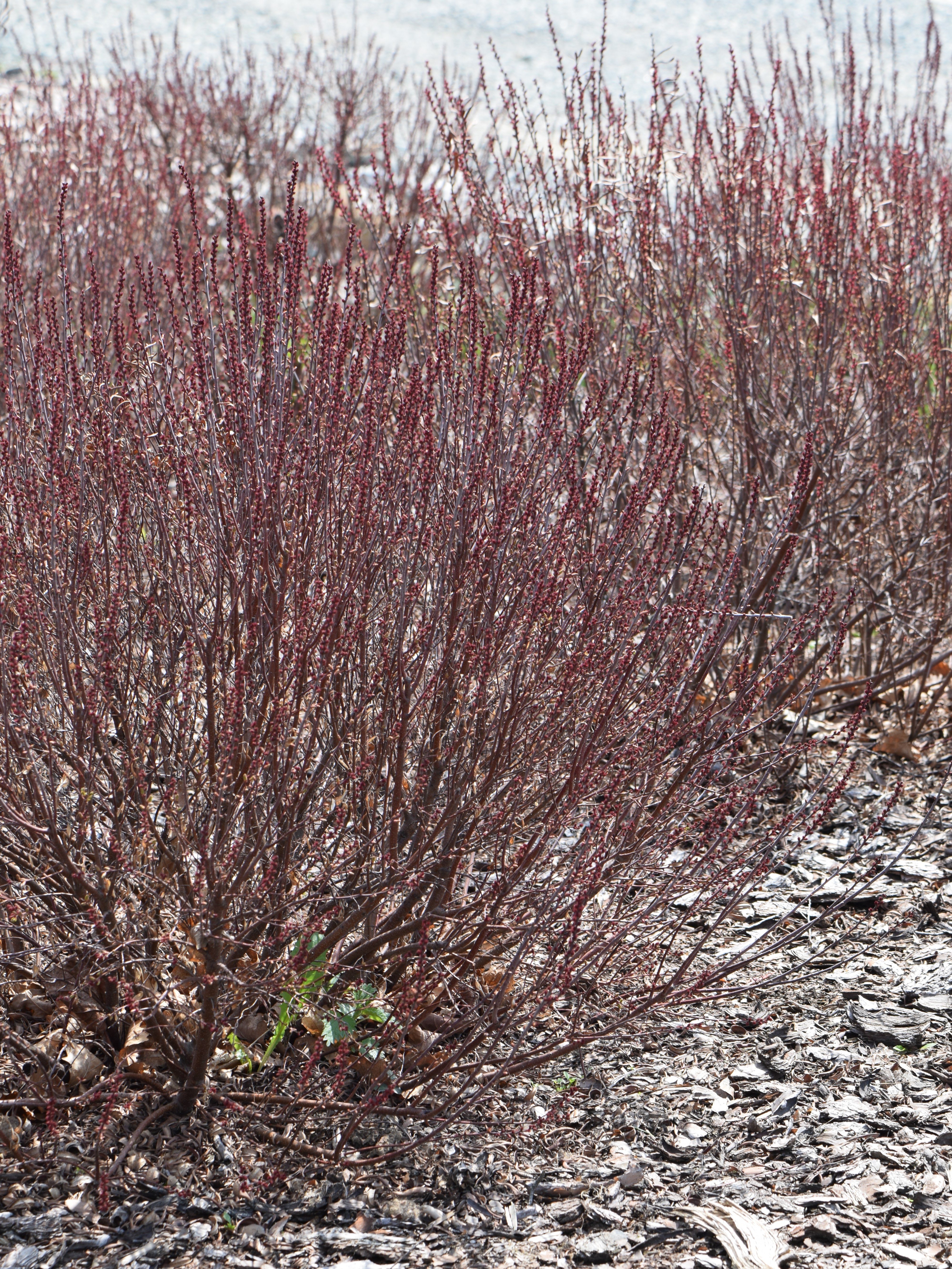
Photo: Krzysztof Ziarnek, Kenraiz — CC BY-SA 4.0 · source
Survives zone 2 through 7
Harvest calendar
Ripens: Fruit in late summer
Best planted in early spring after your last frost, or in fall before the ground freezes, depending on your climate.
The sweet-resinous leaves and small waxy fruit are used as a flavoring, most historically in beer before hops largely took over that role, and the crushed foliage doubles as an insect repellent. Sources genuinely disagree on the cold-hardiness floor, from zone 2 to zone 5 depending on the source — a wide-ranging boreal wetland shrub, so this catalog takes the more generous end, but treat zone 2-3 survival as less certain than the fully-sourced zone 5-7 core of its range.
- Hardiness
- Zone 2–7
- Habit
- Shrub
- Edible part
- Leaf, Fruit
- Ripens
- Fruit in late summer
- Mature size
- 1–2 m tall by 1 m wide
- Light
- Full sun to part shade
- Soil pH
- 4.0–6.0 (acidic), tolerates boggy, poorly drained ground
- Environment
- Boreal to cool temperate wetland
- Native range
- Wetlands, bogs, marshes and lake margins across North America, Europe and Asia, tolerant of brackish water at the upper edge of salt marshes.
- Status
- Wild
- Years to fruit
- 3–4 yrs
- Growth speed
- Slow to moderate
- Spacing
- 120 cm (47 in) apart — about 1.4 m² (16 sq ft) per plant
- Leaf shape
- Narrow, grey-green, aromatic when crushed, dotted with resin glands
- Root system
- Shallow, spreading and fibrous, carrying nitrogen-fixing actinorhizal nodules formed with Frankia bacteria rather than the rhizobia of the pea family — which is how these shrubs live on raw sand and acid peat where little else will. Suckers freely from those roots.
- Fruit description
- Small, waxy, resin-dotted nutlets in dense clusters
- Propagation
- Softwood cuttings in early summer, half-ripe heel cuttings in July–August, hardwood cuttings in November–December, layering, division, or seed.
- Pollination
- Wind-pollinated, and usually dioecious — but this species is well known for switching sex between seasons, so a plant that was male one year may be female the next. In practice a group planting is the way to get fruit. The crop is the aromatic leaf in any case.
The edible parts listed above are a starting point, not a field guide. Identify a plant with certainty — ideally against a local authority — before eating any part of it, and read the full disclaimer. Spotted something wrong? Report it.
Growing guide
Growing tips. A true wetland shrub — wants constantly moist to boggy, acidic ground and struggles in ordinary dry garden soil. Nitrogen-fixing roots suit it to poor, waterlogged sites other shrubs can't use.
Grow journal
Sign in to keep a dated log of when you planted, bloomed and harvested this plant.