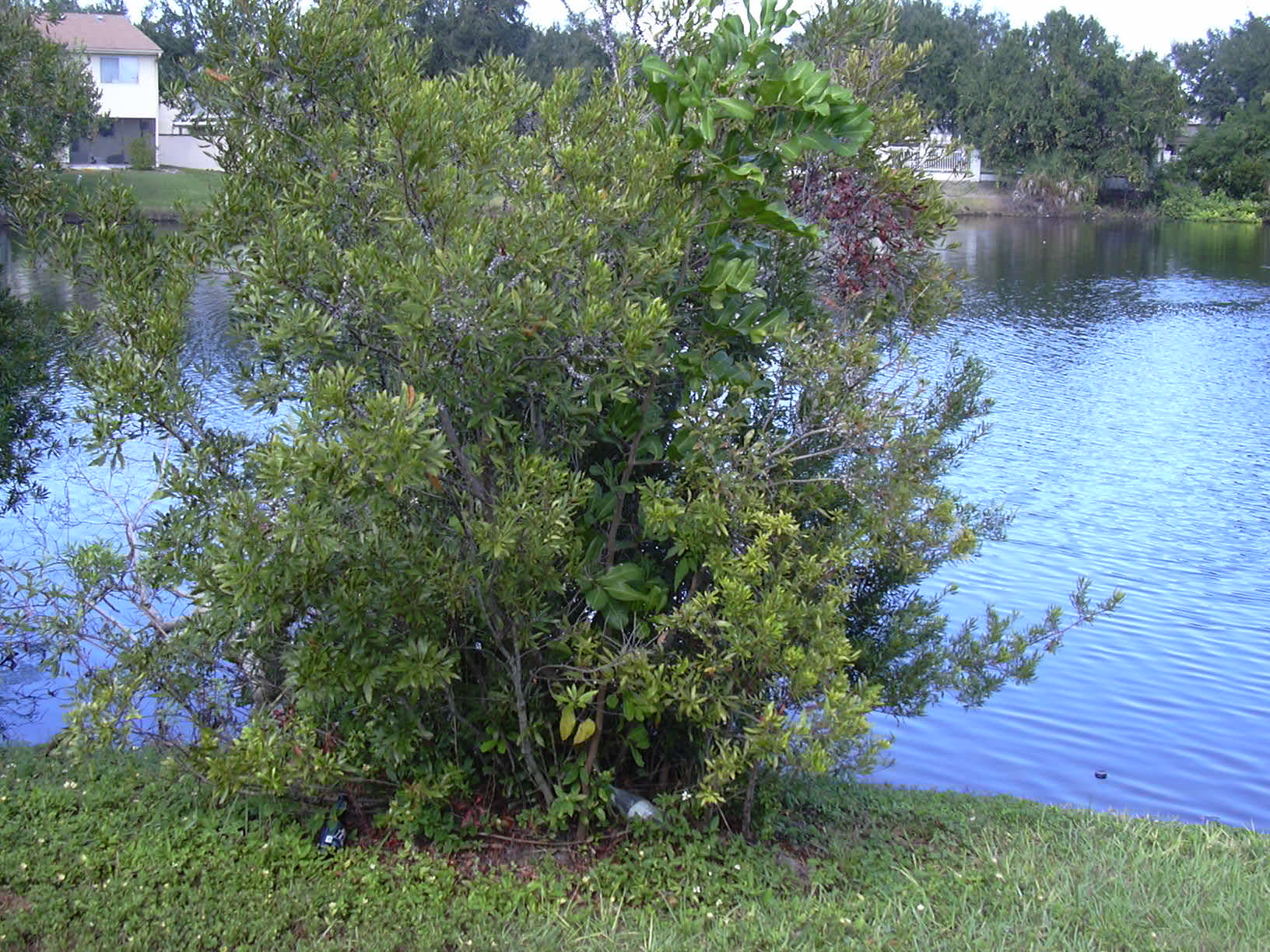
Photo: Forest & Kim Starr — CC BY 3.0 · source
Survives zone 7 through 9
Harvest calendar
Ripens: Fruit in autumn through winter
Best planted in early spring after your last frost, or in fall before the ground freezes, depending on your climate.
Grown far more for the leaves than the fruit — dried and used exactly as a bay leaf, which they closely resemble in flavor, and a genuine, documented substitute rather than a stretch. The small grey-blue, wax-coated berries are edible too, traditionally ground and used sparingly like pepper, but they are what candle and soap makers have always wanted the plant for, not what people eat by the handful — birds, especially yellow-rumped warblers, do that instead.
- Hardiness
- Zone 7–9
- Habit
- Shrub
- Edible part
- Leaf, Fruit
- Ripens
- Fruit in autumn through winter
- Mature size
- 3–4.5 m tall by 2.4–3 m wide; occasionally tree-like to 6 m
- Light
- Full sun to part shade
- Soil pH
- 4.5–7.5, tolerant of both wet and dry extremes
- Environment
- Warm temperate to subtropical, wetlands to dry uplands
- Native range
- Southeastern United States, from New Jersey to Florida, west through the Gulf states to Texas, and south into Mexico and Central America — wetlands, river margins, sand dunes, pine barrens and dry upland forest alike.
- Status
- Both wild and cultivated
- Years to fruit
- 3–5 yrs
- Growth speed
- Fast
- Spacing
- 250 cm (98 in) apart — about 6.3 m² (67 sq ft) per plant
- Leaf shape
- Narrow, glossy, aromatic when crushed, dotted with tiny resin glands, semi-evergreen to evergreen
- Root system
- Shallow, spreading and fibrous, carrying nitrogen-fixing actinorhizal nodules formed with Frankia bacteria rather than the rhizobia of the pea family — which is how these shrubs live on raw sand and acid peat where little else will. Suckers freely from those roots.
- Fruit description
- Small, grey-blue, wax-coated berries in dense clusters along the stem
- Propagation
- Semi-hardwood cuttings in summer, or seed (needs the waxy coating removed and cold stratification).
- Pollination
- Wind-pollinated; dioecious — a female plant needs a male nearby to set fruit.
The edible parts listed above are a starting point, not a field guide. Identify a plant with certainty — ideally against a local authority — before eating any part of it, and read the full disclaimer. Spotted something wrong? Report it.
Growing guide
How it spreads. Nitrogen-fixing and suckers from the root, spreading into broad thickets over time.
Growing tips. Exceptionally adaptable, thriving anywhere from swampy wet ground to dry sandy uplands and tolerating salt spray well enough for coastal planting. Nitrogen-fixing roots mean it needs little feeding even in poor soil.
Grow journal
Sign in to keep a dated log of when you planted, bloomed and harvested this plant.