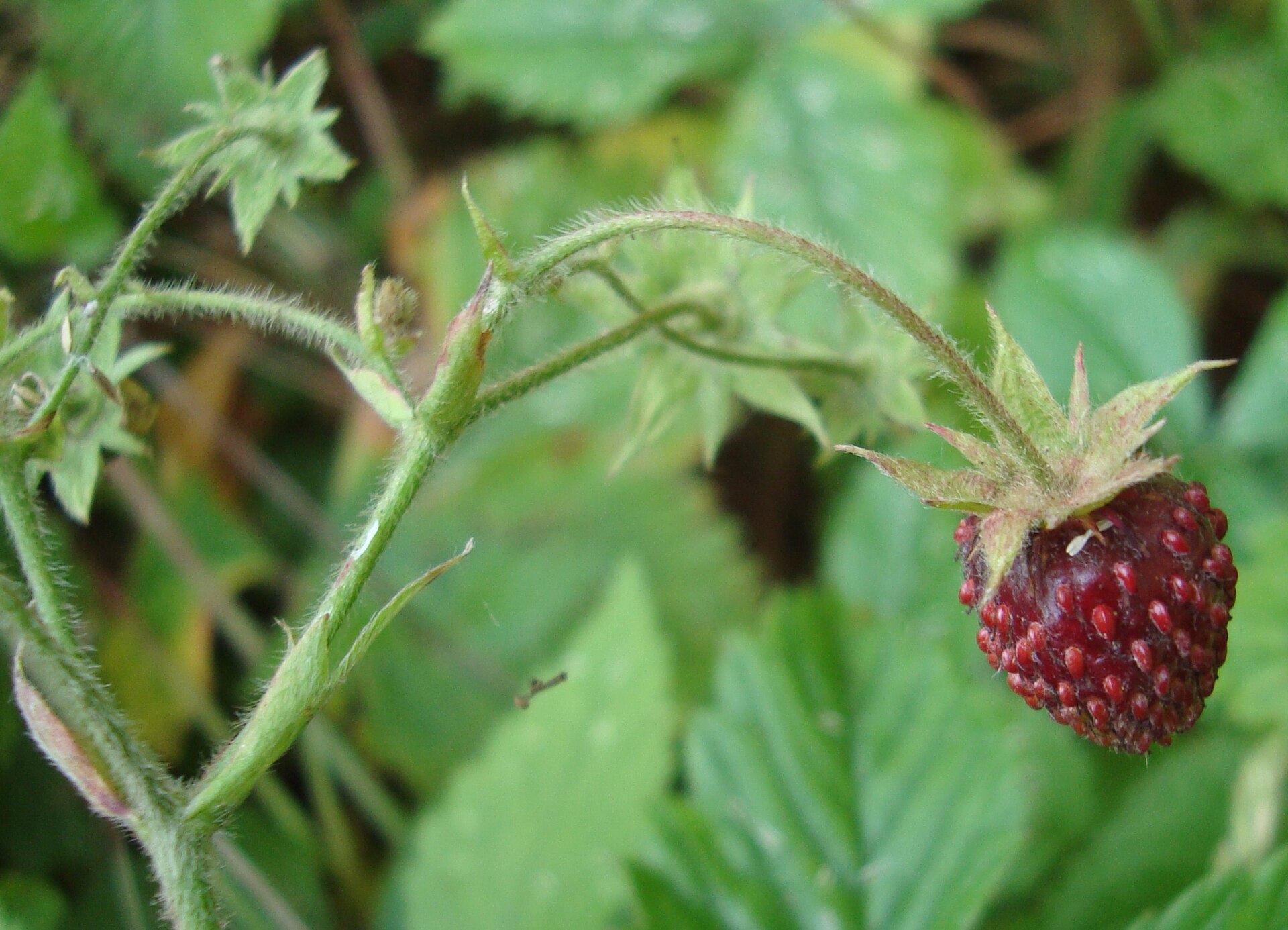
Photo: Dendrofil — Public domain · source
Survives zone 4 through 8
Harvest calendar
Best planted in early spring after your last frost, or in fall before the ground freezes, depending on your climate.
Historically the first strawberry to receive a cultivar name (France, 1576) and the dominant garden strawberry across much of Europe before being displaced by the modern garden strawberry in the 19th century — grown for a complex aroma blending strawberry, raspberry and pineapple notes rather than fruit size.
- Hardiness
- Zone 4–8
- Habit
- Groundcover
- Edible part
- Fruit
- Ripens
- Summer–autumn
- Mature size
- The tallest wild strawberry — an upright rosette 20–40 cm, spreading by runners
- Light
- Full sun to partial
- Soil pH
- 6.0–7.0 (near-neutral)
- Environment
- Woodland
- Native range
- Central and eastern Europe — France and the Low Countries east through Germany, the Alps and the Balkans to European Russia, and on to the Caucasus and south-western Siberia. Naturalised rather than native in Scandinavia, Britain and Ireland, where it is an escape from the cultivation that was widespread until the late nineteenth century.
- Status
- Both wild and cultivated
- Years to fruit
- 2–4 yrs
- Growth speed
- Fast once established, reaching fruiting maturity within 1–2 years.
- Spacing
- 30 cm (12 in) apart — about 11 per m² (10 per 10 sq ft)
- Leaf shape
- Trifoliate, the leaflets large, deeply veined and softly hairy on both sides, on tall hairy petioles — the coarsest foliage of the wild strawberries, matching its unusual height.
- Root system
- Fibrous, dividing into numerous fine roots, with stoloniferous surface runners for spread.
- Fruit description
- Small, round, deep red berries — much smaller than the modern garden strawberry but intensely aromatic, with a flavor often described as blending strawberry, raspberry and pineapple; grown for fragrance over size or yield.
- Propagation
- By seed, sown in early spring (takes four or more weeks to germinate), or more reliably by dividing and transplanting rooted runners in July–August; commercial stock is usually propagated vegetatively since seed-grown plants segregate by sex.
- Pollination
- Functionally dioecious — wild and garden populations include separate male, female and, less commonly, hermaphrodite plants; neither female nor hermaphrodite plants are reliably self-fertile, so a male pollinator needs to be planted nearby for fruiting.
The edible parts listed above are a starting point, not a field guide. Identify a plant with certainty — ideally against a local authority — before eating any part of it, and read the full disclaimer. Spotted something wrong? Report it.
Growing guide
How it spreads. Spreads by runners into a low mat, forming clumps with an ultimate spread of about 10–50 cm that benefit from periodic thinning of excess runners.
Growing tips. Because populations are functionally dioecious, plant both a male and a female (or hermaphrodite, fruiting) clone together — one male can pollinate up to about five females. Tolerates semi-shade but fruits best in full sun, and benefits from a mulch of pine or spruce leaf litter and removing old foliage after fruiting.
Grow journal
Sign in to keep a dated log of when you planted, bloomed and harvested this plant.