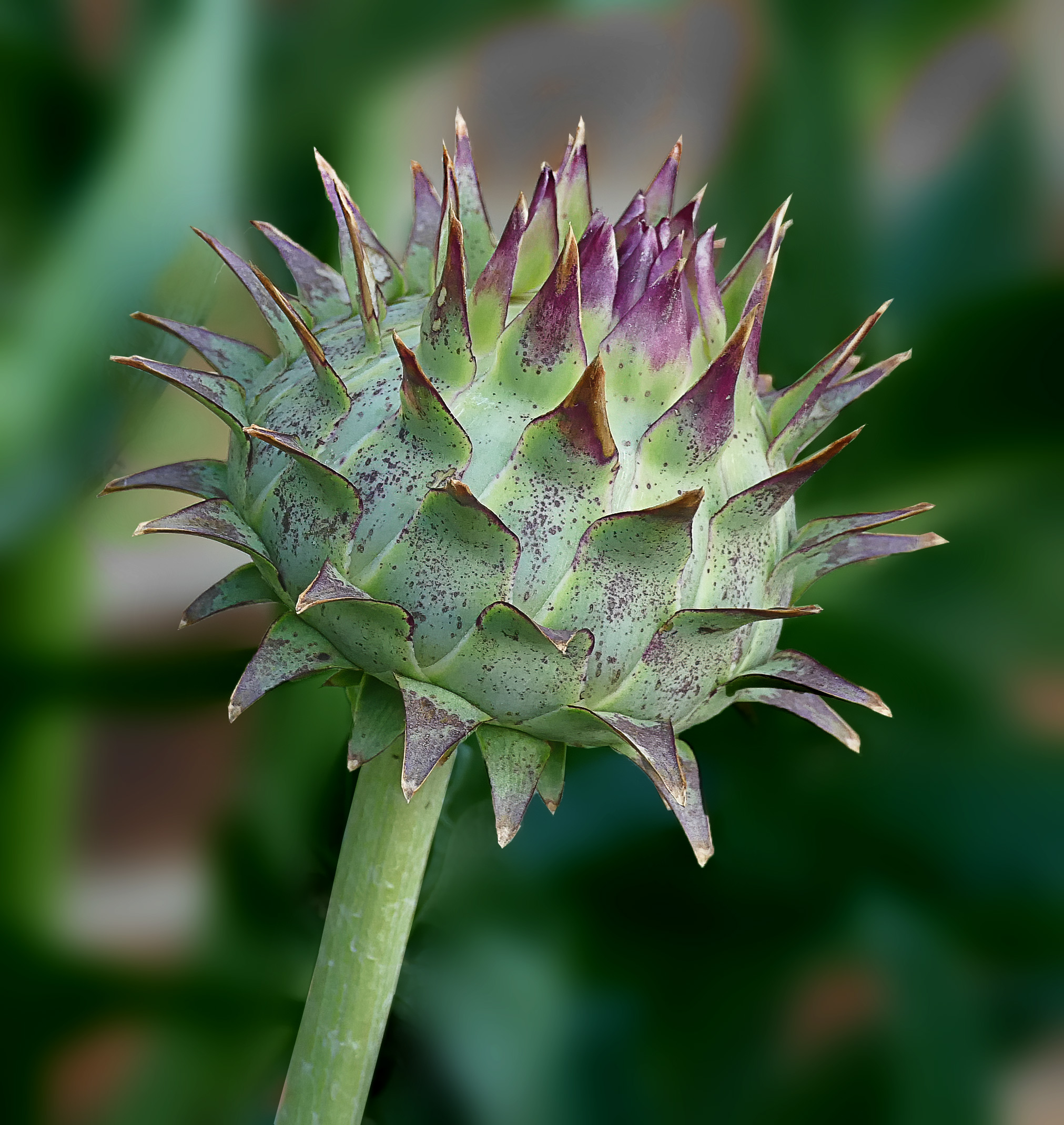
Photo: Jim Evans — CC BY-SA 4.0 · source
Survives zone 7 through 9
Harvest calendar
Ripens: Stalks blanched and harvested in autumn
Best planted in early spring after your last frost, or in fall before the ground freezes, depending on your climate.
Grown for its thick leaf stalks (not the flower bud, which is smaller and less developed than its close relative the globe artichoke) — blanched by wrapping to exclude light in the weeks before harvest, then boiled or braised with a mild artichoke flavor. A large, architectural, thistle-like plant popular in Mediterranean cuisine since antiquity.
- Hardiness
- Zone 7–9
- Habit
- Herb
- Edible part
- Leaf
- Ripens
- Stalks blanched and harvested in autumn
- Mature size
- 1.5–2 m tall by 1–1.2 m wide
- Light
- Full sun
- Soil pH
- 6.0–7.5
- Environment
- Mediterranean
- Native range
- Mediterranean basin and North Africa — dry, sunny, open ground.
- Status
- Both wild and cultivated
- Years to fruit
- 1 yr
- Growth speed
- Fast — 2 m of growth in a season from a spring division
- Spacing
- 100 cm (39 in) apart — about 1 m² (11 sq ft) per plant
- Leaf shape
- Large, deeply lobed, silvery-grey, spiny in wild forms
- Root system
- A deep, thick taproot with strong laterals, reaching well down for summer water — the drought tolerance of a Mediterranean plant, and the reason an established cardoon is hard to move and harder to kill.
- Fruit description
- Not a fruit crop, but worth knowing: the thistle flowers give a head of seed on a pappus, and the dried flowers of this species are the traditional vegetarian rennet used to set Portuguese and Spanish sheep's-milk cheeses.
- Propagation
- Seed, division, root cuttings, or suckers.
- Pollination
- Insect-pollinated, chiefly by bumblebees, and self-compatible — a single plant sets seed. The crop is a leaf stalk, so pollination does not affect it.
The edible parts listed above are a starting point, not a field guide. Identify a plant with certainty — ideally against a local authority — before eating any part of it, and read the full disclaimer. Spotted something wrong? Report it.
Growing guide
Growing tips. In zones below about 7, treat as an annual (start indoors, harvest the first season) rather than expect it to overwinter — a heavy dry mulch helps at the cold edge of its perennial range. Needs full sun and a long growing season to bulk up its stalks.
Grow journal
Sign in to keep a dated log of when you planted, bloomed and harvested this plant.