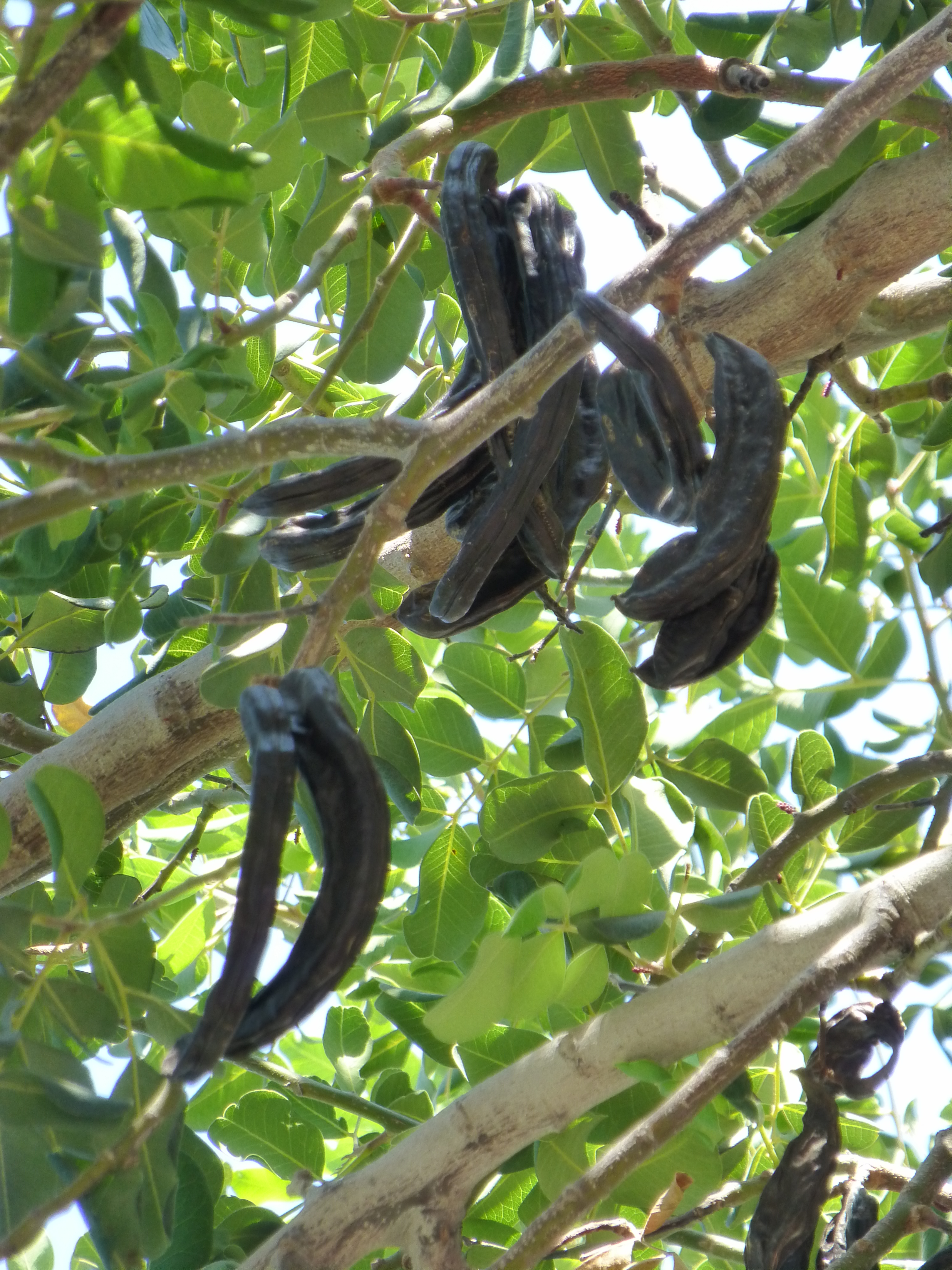
Photo: Nevit Dilmen — CC BY-SA 3.0 · source
Survives zone 8 through 9
Harvest calendar
Best planted in early spring after your last frost, or in fall before the ground freezes, depending on your climate.
The sweet, dried pod pulp is ground into carob powder, a caffeine-free substitute for cocoa in baking. The seeds inside are famously uniform in weight — historically used as the original unit behind the "carat" used for gemstones.
- Hardiness
- Zone 8–9
- Habit
- Tree
- Edible part
- Fruit, Seed
- Ripens
- Sept–Oct, pods maturing over the following months
- Mature size
- Slow-growing to 8–15 m tall and wide
- Light
- Full sun
- Soil pH
- 6.0–8.5 (tolerates poor, strongly alkaline soil)
- Environment
- Mediterranean, coastal
- Native range
- Around the Mediterranean basin — rocky, coastal ground, tolerant of poor and strongly alkaline soils.
- Status
- Both wild and cultivated
- Years to fruit
- 6–8 yrs grafted; 12–15 from seed
- Growth speed
- Slow
- Spacing
- 800 cm (315 in) apart — about 64 m² (689 sq ft) per plant
- Leaf shape
- Pinnately compound, glossy dark green leaflets, evergreen
- Root system
- A deep, powerful taproot with far-reaching laterals — carob will find water where almost nothing else can, which is why it anchors dryland agroforestry around the Mediterranean. It resents being moved and should be planted small.
- Fruit description
- Long, flat, leathery pods 10–20 cm, green ripening dark wrinkled brown, sweet pulp around hard, uniform seeds
- Propagation
- Seed (scarify, then soak 1 hour before sowing), or semi-ripe cuttings treated with rooting hormone — cuttings root slowly and are considered difficult.
- Pollination
- Wind- and insect-pollinated (wasps and flies); mostly dioecious, with female trees favored in cultivation for the pods, so a male or a bisexual cultivar is usually needed nearby for reliable fruit set.
The edible parts listed above are a starting point, not a field guide. Identify a plant with certainty — ideally against a local authority — before eating any part of it, and read the full disclaimer. Spotted something wrong? Report it.
Growing guide
Growing tips. Slow to establish but very drought-tolerant and long-lived once mature, thriving in poor, dry, alkaline soil that would stress most fruit trees. Frost-tender — protect young trees, and expect real cold damage below about 15°F.
Grow journal
Sign in to keep a dated log of when you planted, bloomed and harvested this plant.