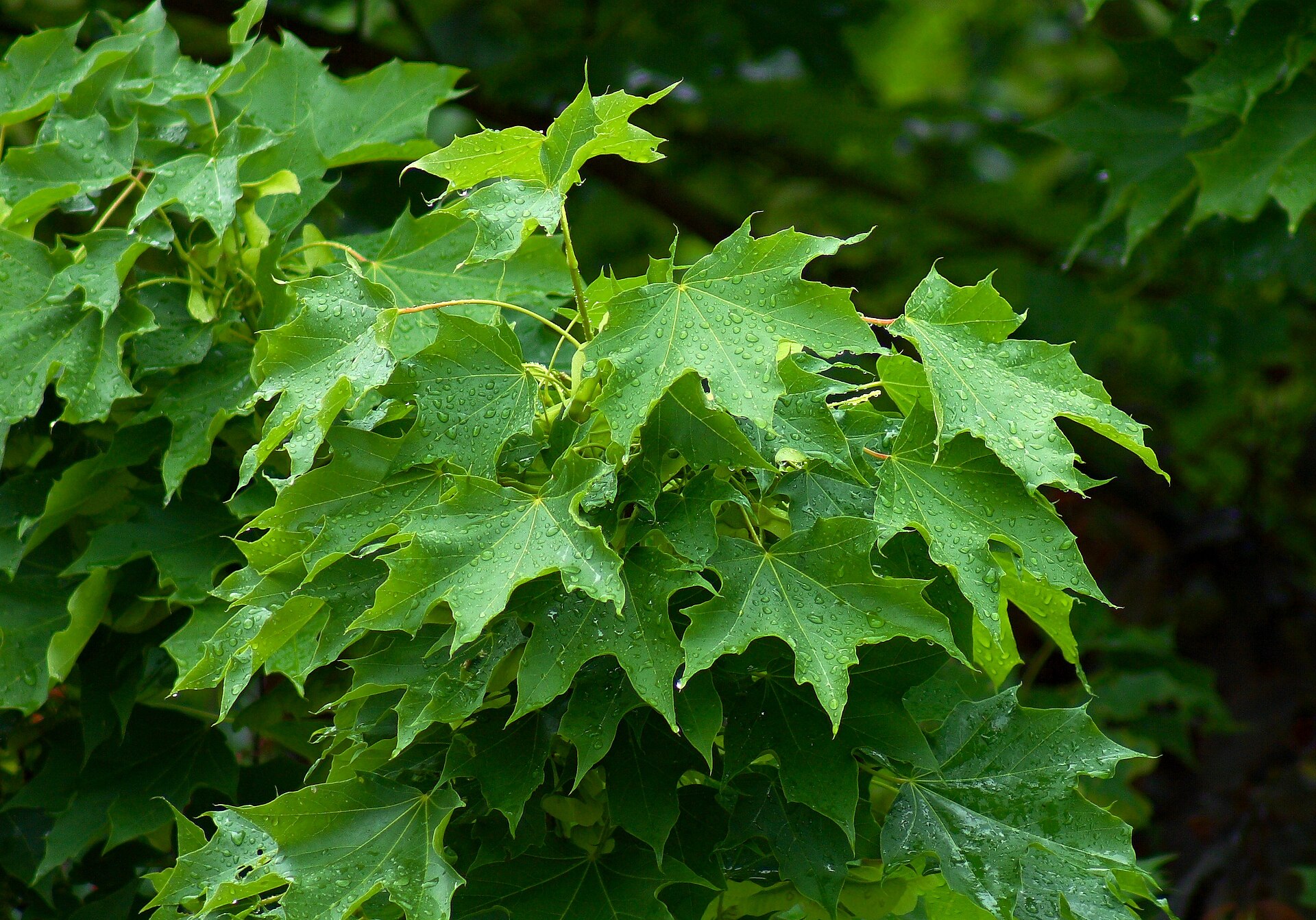
Photo: Martin Bobka (= Martin120) — CC BY-SA 2.5 · source
2
3
4
5
6
7
8
9
Survives zone 4 through 7
Harvest calendar
Jan
Feb
Mar
Apr
May
Jun
Jul
Aug
Sep
Oct
Nov
Dec
Best planted in early spring after your last frost, or in fall before the ground freezes, depending on your climate.
Spring sap tapped for syrup — around 3.2% sugar, a good tappable European maple.
- Hardiness
- Zone 4–7
- Habit
- Tree
- Edible part
- Sap
- Ripens
- Late winter (sap run)
- Mature size
- Large tree 20–30 m — not containerable
- Light
- Full sun to partial
- Soil pH
- 6.0–7.0
- Environment
- Temperate
- Native range
- Europe and western Asia — Norway and France east to the Caucasus and Iran. ⚠ Seriously invasive across much of north-eastern North America, where it shades out native forest understorey; banned from sale in several states.
- Status
- Both wild and cultivated
- Years to fruit
- 10+ yrs (sap)
- Growth speed
- 45–75 cm/year — fast.
- Spacing
- 1000 cm (394 in) apart — about 100 m² (1076 sq ft) per plant
- Leaf shape
- Opposite, 10–15 cm long and slightly wider, with five broad-based lobes each tapering to a fine point and carrying one or two large pointed teeth. ⚠ The certain test: snap the leaf stalk and it bleeds milky white sap, which no native North American maple does.
- Root system
- Shallow, woody and widely branching, casting dense shade over a mat of surface roots that little else will grow through — a large part of why it displaces native ground flora.
- Fruit description
- Paired samaras 3.5–5 cm long held almost flat in a straight line, close to 180° — much wider than any native maple's, and the easiest fruit character for telling it apart.
- Propagation
- Seed (the winged samara) needs 40–120 days moist cold stratification at 1–5°C; autumn sowing outdoors achieves this naturally. Named forms are grafted, since seedlings vary.
- Pollination
- Heterodichogamous and mainly insect-pollinated — populations contain both male-first and female-first individuals, so cross-pollination between the two types is the norm. Not simply self-fertile. Irrelevant to a sap crop.
The edible parts listed above are a starting point, not a field guide. Identify a plant with certainty — ideally against a local authority — before eating any part of it, and read the full disclaimer. Spotted something wrong? Report it.
Grow journal
Sign in to keep a dated log of when you planted, bloomed and harvested this plant.